

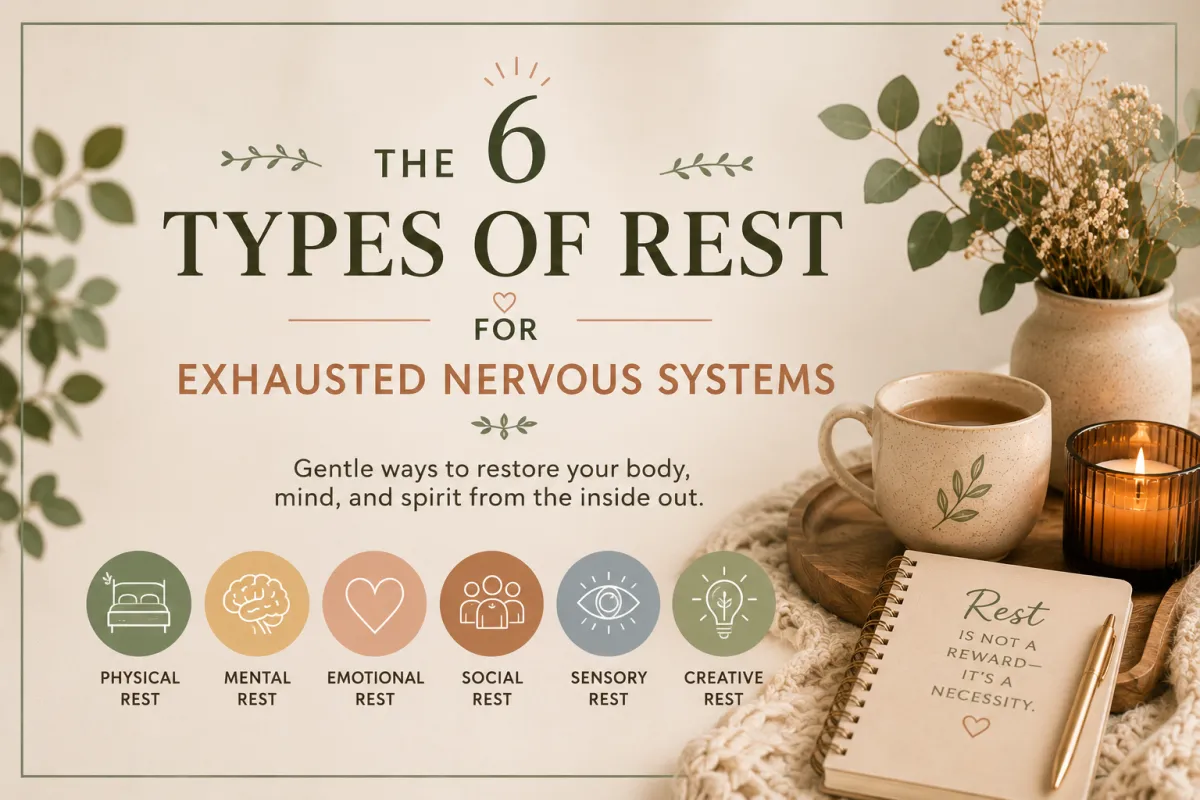
The 6 Types of Rest for Exhausted Nervous Systems
When most people think about rest, they think about sleep.
But for many people living with burnout, chronic stress, emotional overwhelm, or chronic illness, sleep alone often doesn’t feel enough.
You can sleep for eight hours and still wake up exhausted.
That’s because exhaustion is not always physical.
Sometimes your nervous system is overwhelmed.
Sometimes your emotions are overloaded.
Sometimes your senses have simply had too much.
True restoration often requires more than one kind of rest.
At Phoenix Vitality, we believe rest should be gentle, intentional, and free from guilt. And understanding the different types of rest can help you identify what your body and mind may actually be asking for.
1. Physical Rest
Physical rest is the type most people recognise first.
This includes:
sleep
naps
stretching
slowing down
restorative movement
allowing your body time to recover
But physical rest is not always about “doing nothing.”
Sometimes it looks like:
gentle yoga
lying under a blanket
sitting quietly
pacing yourself during a flare day
giving yourself permission to stop pushing through exhaustion
For people with chronic illness, burnout, or nervous system dysregulation, physical rest is essential rather than optional.
Your body is not failing you.
It is asking for support.
2. Mental Rest
Mental exhaustion can feel like:
brain fog
racing thoughts
forgetfulness
difficulty concentrating
emotional overwhelm
feeling mentally “switched on” all the time
Mental rest means creating moments where your brain no longer needs to process, plan, perform, or problem-solve constantly.
This might include:
reducing multitasking
taking quiet breaks
listening to calming audio
journaling
guided meditation
stepping away from screens
Even a few moments of stillness throughout the day can help reduce nervous system overload.
3. Emotional Rest
Emotional exhaustion is one of the most overlooked forms of burnout.
Many people spend so much energy:
masking
people pleasing
caregiving
holding everything together
suppressing emotions
staying “strong”
that they never fully process how they truly feel.
Emotional rest means giving yourself permission to:
feel honestly
stop performing
set boundaries
say no without guilt
express emotions safely
release emotional pressure
Journaling, therapy, quiet reflection, and nervous system support practices can all help create emotional rest.
4. Social Rest
Even people who love others deeply can become socially exhausted.
Social rest is especially important for highly sensitive people, introverts, caregivers, and those living with chronic illness or burnout.
Social exhaustion may show up as:
irritability
withdrawal
emotional fatigue
overwhelm after conversations
needing silence after social interaction
Social rest does not necessarily mean isolation.
It simply means creating space where you do not feel emotionally “on” for others all the time.
Sometimes social rest looks like:
quiet mornings
time in nature
reading
reduced notifications
spending time with emotionally safe people
Your nervous system deserves space to breathe.
5. Sensory Rest
Modern life constantly stimulates the nervous system.
Screens.
Noise.
Notifications.
Bright lights.
Crowded spaces.
Constant information.
Over time, sensory overload can leave you feeling:
anxious
irritable
exhausted
emotionally dysregulated
unable to fully relax
Sensory rest means intentionally reducing stimulation.
This may include:
dim lighting
calming music
silence
reducing screen time
cosy spaces
gentle environments
stepping away from social media
Even small sensory shifts can help calm an overwhelmed nervous system.
6. Creative Rest
Creative rest is about reconnecting with inspiration, wonder, beauty, and curiosity without pressure or productivity.
Many exhausted nervous systems become trapped in survival mode.
Creative rest gently reminds us that life is not only about coping.
Creative rest might include:
listening to music
painting
crafting
photography
nature walks
reading
slow creative hobbies
observing beauty without needing to “achieve” anything
Creativity can be deeply restorative when approached softly and without expectation.
Why Understanding Rest Matters
Many people experiencing burnout believe they simply need:
more motivation
more discipline
better productivity
But often what they truly need is:
deeper restoration.
Rest is not laziness.
Rest is not weakness.
Rest is a nervous system need.
And different forms of exhaustion require different forms of care.
Gentle Reminder
You do not need to earn rest.
You do not need to wait until you completely collapse before slowing down.
Even small moments of restoration matter.
A quiet pause.
A slower morning.
A deep breath.
A gentle boundary.
A moment away from overstimulation.
These things count too.
Explore Gentle Support
If your nervous system has been feeling overwhelmed, emotionally exhausted, or burnt out, you may also find support inside our:
Burnout & Exhaustion Collection
Flare Day Support Collection
Remote Frequency Wellness Collection
Phoenix Vitality was created to offer gentle digital wellbeing support for exhausted minds, overwhelmed nervous systems, and people learning to rest without guilt.
Gentle Reads for You
Supportive Disclaimer: Phoenix Vitality content is designed for gentle wellbeing support and is not intended to replace medical advice or professional healthcare support.