

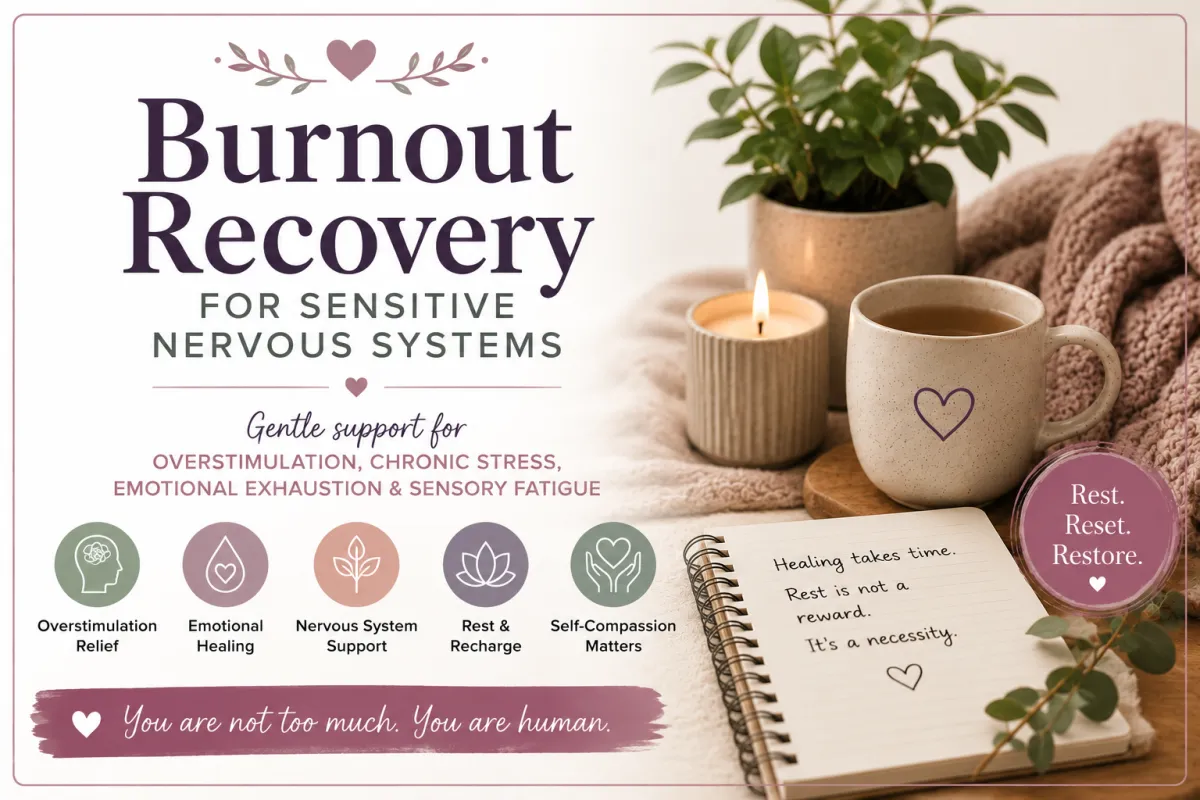
Burnout Recovery for Sensitive Nervous Systems
Gentle Support for Overstimulation, Emotional Exhaustion & Chronic Stress
Burnout does not always look dramatic.
Sometimes it looks like:
feeling emotionally numb
crying more easily
struggling to concentrate
becoming overwhelmed by noise
needing more alone time
feeling exhausted after simple tasks
losing interest in things you once enjoyed
feeling constantly “on edge”
being tired but unable to fully rest
And for people with sensitive nervous systems, burnout often arrives quietly after long periods of:
overstimulation
emotional pressure
chronic stress
over-responsibility
sensory overload
pushing through exhaustion
Many people do not realise how overwhelmed their nervous system has become until their body finally forces them to slow down.
But burnout is not weakness.
It is not laziness.
And it is not a personal failure.
It is often a nervous system that has been under pressure for far too long.
What Is Nervous System Burnout?
Burnout is more than simply being tired.
It is a state of physical, emotional, and mental exhaustion caused by prolonged stress and overwhelm.
Sensitive nervous systems tend to process:
emotions deeply
environments intensely
stress more heavily
sensory input more strongly
Which means burnout can happen faster, and recovery may take longer.
You may appear “fine” externally while internally feeling:
overstimulated
emotionally depleted
mentally foggy
physically drained
Over time, the nervous system begins struggling to regulate stress effectively.
Signs Your Nervous System May Be Overwhelmed
Burnout can affect the body, mind, and emotions in many ways.
Common signs include:
emotional exhaustion
brain fog
irritability
chronic fatigue
sensory sensitivity
difficulty sleeping
tension headaches
overwhelm from small tasks
feeling disconnected or numb
low motivation
increased anxiety
needing more recovery time after socialising
You may also notice:
sound feels “too loud”
lights feel harsh
crowded environments become exhausting
messages and notifications feel overwhelming
decision-making feels harder than usual
This is often sensory fatigue.
And it is more common than many people realise.
Chronic Stress Changes the Body
When the nervous system remains in survival mode for long periods, the body starts adapting to stress as if it is constant.
This can leave you feeling:
wired but exhausted
unable to fully relax
emotionally reactive
hyper-alert
physically tense
The body was never designed to remain in fight-or-flight all the time.
Rest and recovery are essential for nervous system healing.
Overstimulation Is Exhausting
Many sensitive people underestimate how draining constant stimulation can be.
Modern life bombards the nervous system with:
screens
noise
notifications
social pressure
multitasking
information overload
emotional labour
Even “normal” daily life can become exhausting when your nervous system rarely gets quiet.
This is why sensory rest matters so much.
Sensory rest may look like:
dimming lights
reducing screen time
spending time in silence
lowering background noise
taking social breaks
sitting outside in nature
resting without stimulation
Small reductions in overwhelm can create meaningful nervous system shifts.
Emotional Exhaustion Is Real
Some forms of burnout are not physical first.
They are emotional.
You may feel:
emotionally flat
disconnected
unable to cope with one more demand
drained by other people’s needs
emotionally “full”
deeply tired in a way sleep does not fix
Emotional exhaustion often develops after:
caregiving
chronic stress
masking struggles
people pleasing
constant emotional responsibility
prolonged anxiety
Emotional rest becomes incredibly important here.
Burnout Recovery Needs Gentleness
Many people approach recovery with the same pressure that caused burnout in the first place.
Trying to:
“fix” themselves quickly
become productive again immediately
push through exhaustion
force healing
But sensitive nervous systems often recover better through:
softness
slowness
safety
pacing
reduced stimulation
compassionate routines
Healing rarely happens through pressure.
Gentle Ways to Support an Exhausted Nervous System
Recovery does not need to be complicated.
Sometimes small supportive actions matter most.
Try:
taking regular pauses during the day
resting before complete exhaustion
reducing sensory overload
creating calming evening routines
listening to soothing music
journaling emotions
gentle stretching or yoga
spending time in nature
allowing more quiet
disconnecting from screens
taking slow mornings where possible
drinking calming herbal teas
practising guided meditation
Even tiny moments of restoration can help support emotional and physical wellbeing.
Rest Is Not Something You Earn
One of the biggest barriers to burnout recovery is guilt.
Many people believe:
they should be coping better
they should push harder
they have not “done enough” to deserve rest
But rest is not a reward for overexhaustion.
Rest is a biological need.
Your nervous system deserves recovery before reaching complete depletion.
The Different Types of Rest Matter Too
Sometimes burnout persists because we are only trying to recover physically.
But many overwhelmed nervous systems also need:
emotional rest
sensory rest
social rest
mental rest
creative rest
Different kinds of exhaustion require different kinds of support.
This is why simply “sleeping more” does not always fully restore burnout.
Gentle Reminder
You are not failing because you feel overwhelmed.
Your nervous system may simply be exhausted from carrying too much for too long.
Recovery does not have to be rushed.
Healing does not need to feel harsh.
And slowing down is not weakness.
Sometimes it is wisdom.
Gentle Reflection
Ask yourself:
“What has my nervous system been trying to tell me lately that I have been too exhausted to hear?”
Gentle Support for Burnout Recovery
Explore the Phoenix Vitality Burnout & Exhaustion Collection for calming wellness tools, nervous system support resources, guided practices, affirmations, and restorative self-care designed for emotionally overwhelmed and exhausted minds and bodies.
Gentle Reads for You
Supportive Disclaimer: Phoenix Vitality content is designed for gentle wellbeing support and is not intended to replace medical advice or professional healthcare support.