

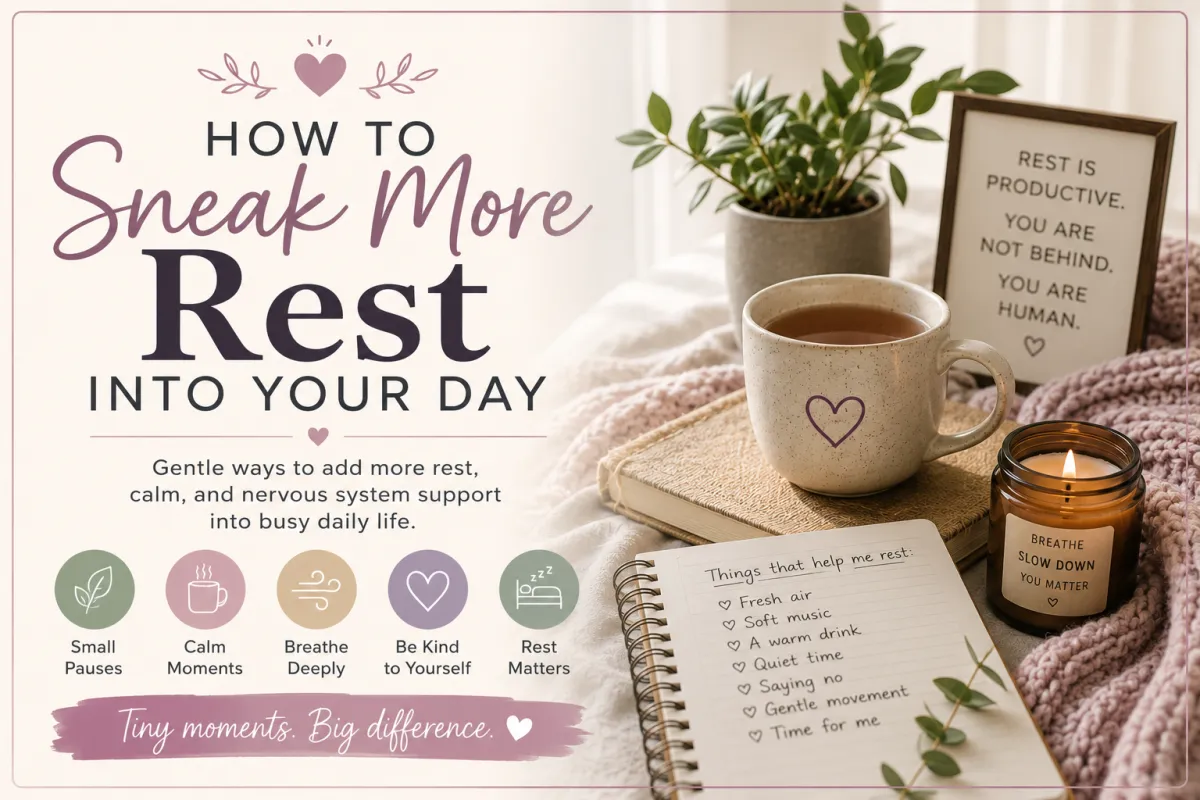
How to Sneak More Rest Into Your Day
Gentle Ways to Support an Exhausted Nervous System
When people think about rest, they often imagine needing:
emotional
sensory
mental
creative
social
physical
Different forms of exhaustion need different forms of recovery.
For example:
brain fog may need mental rest
overstimulation may need sensory rest
emotional overwhelm may need quiet and boundaries
physical fatigue may need stillness or sleep
This is why learning to notice what kind of rest you need matters so much.
Use Small Breaks More Intentionally
Many people spend breaks:
scrolling social media
answering messages
multitasking
consuming more stimulation
But even two to five minutes of intentional stillness can help regulate an overwhelmed nervous system.
Try:
stepping outside for fresh air
sitting quietly with your eyes closed
stretching gently
breathing deeply
listening to calming music
simply pausing without doing anything
These tiny pauses can help your body reset throughout the day.
Create Tiny Rest Rituals
Rest becomes easier when it feels familiar.
Small rituals can signal safety and calm to your nervous system.
Simple examples:
making tea slowly
lighting a candle in the evening
listening to a calming playlist
sitting in silence for five minutes
journaling before bed
stretching after work
reading a few pages of a comforting book
These moments may seem small, but they help create emotional breathing room.
Stop Waiting Until You Are Completely Exhausted
Many people only rest once their body forces them to.
But recovery becomes harder when exhaustion is already severe.
Learning to rest before complete depletion is an important form of self-care.
This may mean:
sitting down sooner
saying no earlier
taking pauses before burnout
reducing sensory overload
pacing your energy more gently
Your body does not need to “earn” rest through collapse.
Try a Micro Rest Instead of Pushing Through
You do not always need an hour-long break to help your nervous system.
Sometimes:
five minutes of silence
ten minutes lying down
a short walk
a breathing exercise
a warm drink
a quick guided meditation
can help shift your stress levels enough to continue more gently.
Even short moments of rest can improve focus, mood, and mental clarity.
Reduce Sensory Overload Where You Can
Modern life can be incredibly overstimulating.
Noise.
Screens.
Notifications.
Bright lights.
Constant information.
Over time, sensory overload can leave the nervous system feeling frazzled and exhausted.
Sensory rest may look like:
dimming lights
lowering volume
stepping away from screens
using calming music
reducing clutter
spending time in quiet spaces
Small environmental changes can create surprisingly large nervous system shifts.
Let Rest Be Gentle Instead of “Perfect”
Many people accidentally turn self-care into another pressure-filled task.
You do not need:
a perfect morning routine
expensive wellness products
a silent retreat
hours of free time
Sometimes rest is simply:
sitting with your pet
drinking tea slowly
doing less
allowing yourself softness
taking a slower evening
choosing comfort over productivity
Simple rest still matters.
Practice Mindfulness in Everyday Moments
Mindfulness does not always need to look like formal meditation.
It can simply mean:
noticing your breathing
feeling warm water on your hands
paying attention while drinking tea
listening fully to music
slowing down while walking
being present for one quiet moment
Mindfulness helps bring the nervous system back into the present moment rather than remaining trapped in stress or overwhelm.
Give Yourself Permission to Rest Without Guilt
This may be the hardest part of all.
Many people feel guilty:
sitting down
doing less
cancelling plans
needing recovery time
choosing rest over productivity
But rest is not wasted time.
Rest supports:
emotional wellbeing
nervous system regulation
mental clarity
creativity
physical recovery
resilience
You are allowed to slow down.
Signs Your Body May Need More Rest
You may need more intentional pauses if you notice:
brain fog
irritability
exhaustion
overwhelm
emotional sensitivity
headaches
trouble focusing
feeling “wired but tired”
sensory overwhelm
increased fatigue after busy days
These are not signs that you are failing.
They are signs your body may need more support.
Gentle Reminder
Rest does not always need to be dramatic to be healing.
Tiny moments matter.
Small pauses matter.
Softness matters.
And sometimes the most supportive thing you can do for your nervous system is stop expecting yourself to function like a machine.
Gentle Reflection
Ask yourself:
“Where could I create one softer moment in my day today?”
Not a complete life overhaul.
Just one small moment of support.
Gentle Support for Exhausted Days
Explore the Phoenix Vitality Rest & Recovery Collection for calming wellness tools, nervous system support resources, guided practices, and gentle self-care designed for busy, overwhelmed, and exhausted minds and bodies.
Gentle Reads for You
Supportive Disclaimer: Phoenix Vitality content is designed for gentle wellbeing support and is not intended to replace medical advice or professional healthcare support.