

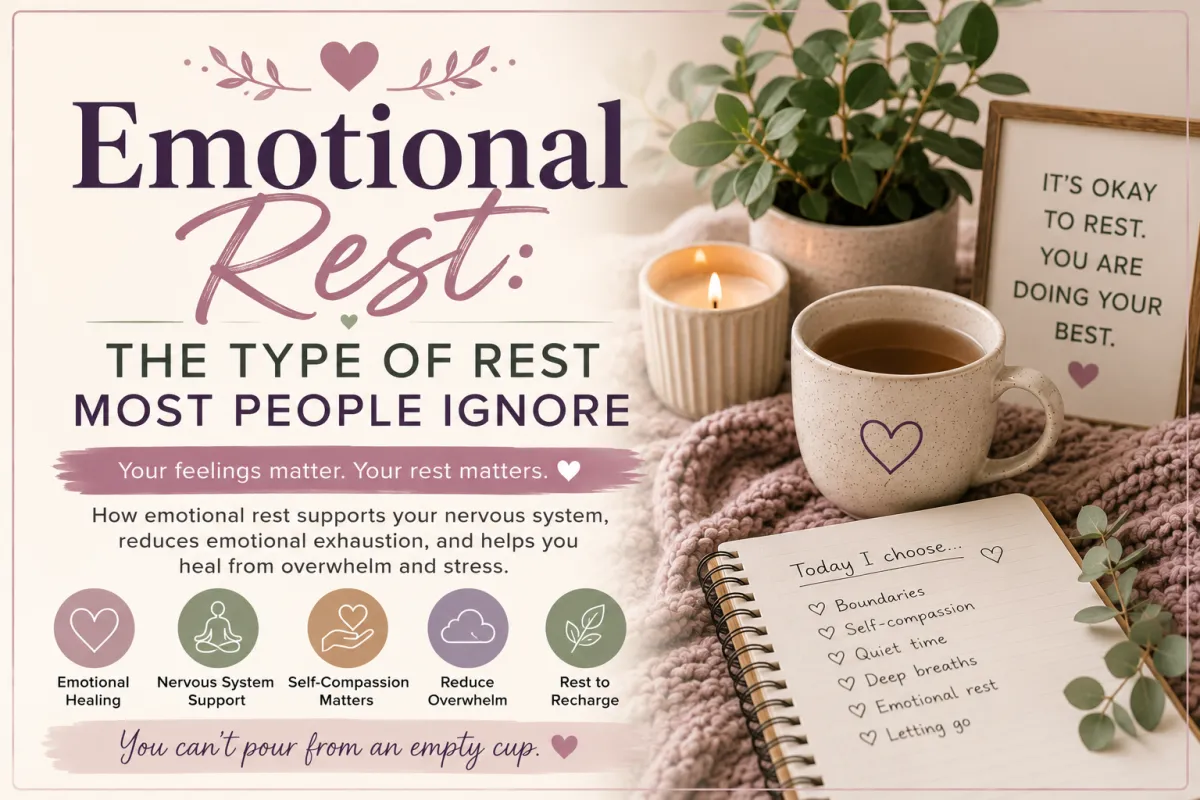
Emotional Rest: The Type of Rest Most People Ignore
Why Emotional Exhaustion Cannot Be Fixed by Sleep Alone
You can sleep for eight hours and still wake up exhausted.
You can take a day off and still feel emotionally heavy.
You can physically rest while your nervous system still feels overwhelmed.
Because not all exhaustion is physical.
Sometimes what you are truly craving is:
emotional rest.
And for many people, emotional rest is the type of rest they are missing most.
It is also one of the most overlooked.
Inspired by the emotional rest section of The 6 Types of Rest, emotional rest involves processing your feelings, reducing emotional overwhelm, and creating space away from emotional turbulence.
Without it, burnout can quietly build beneath the surface, even when you are technically “resting.”
What Is Emotional Rest?
Emotional rest is the ability to:
be honest about how you feel
stop masking your emotions
reduce emotional pressure
feel safe enough to soften
step away from emotional overload
It is the kind of rest that allows your nervous system to stop carrying emotional weight all the time.
Many people are emotionally exhausted without even realising it.
Especially people who are:
caregivers
helpers
highly sensitive
chronic overthinkers
people pleasers
emotionally supportive to everyone else
living with chronic stress or illness
When you constantly hold space for others without replenishing yourself, emotional fatigue can slowly take hold.
Signs You May Need Emotional Rest
Emotional exhaustion can show up in subtle ways.
You may notice:
feeling emotionally numb
becoming irritable more easily
crying more often
struggling to process feelings
feeling “drained” after conversations
wanting to withdraw from people
emotional overwhelm over small things
difficulty coping with stress
constantly feeling mentally “full”
feeling emotionally responsible for everyone
You may also feel:
exhausted despite resting physically
emotionally disconnected
unable to fully relax
emotionally overstimulated
These are often signs your nervous system needs emotional recovery.
Why Emotional Rest Is So Often Ignored
Many people have learned to:
suppress emotions
stay “strong”
keep going
prioritise everyone else’s needs
avoid disappointing people
So emotional exhaustion becomes normalised.
You may tell yourself:
“Other people have it worse.”
“I should be coping better.”
“I just need to push through.”
“I don’t have time to fall apart.”
But emotional needs do not disappear simply because we ignore them.
They remain in the nervous system.
And eventually, the body often starts asking for rest in louder ways:
burnout
fatigue
anxiety
overwhelm
shutdown
emotional sensitivity
Emotional Rest Is Not Isolation
Many people think emotional rest means completely withdrawing from life.
But emotional rest is not necessarily about avoiding people.
It is about reducing emotional pressure.
Sometimes emotional rest looks like:
saying no without guilt
spending time with safe people
journaling honestly
allowing yourself to cry
spending time alone
resting from emotional labour
turning off notifications
reducing overstimulation
stepping back from draining conversations
allowing yourself to stop “performing”
Emotional rest often begins with honesty.
The Nervous System Needs Emotional Safety
When emotions are constantly suppressed or ignored, the nervous system can remain stuck in survival mode.
Your body may stay:
tense
hyper-alert
emotionally reactive
mentally overwhelmed
Emotional rest helps create a sense of:
safety
spaciousness
softness
regulation
And that matters deeply for healing.
Emotional Exhaustion and Chronic Illness
People living with chronic illness often carry invisible emotional weight:
masking symptoms
explaining their needs repeatedly
managing uncertainty
coping with exhaustion
feeling misunderstood
dealing with guilt around rest or limitations
This emotional labour can become incredibly draining.
Which is why emotional rest is not optional.
It is necessary support for nervous system wellbeing.
Gentle Ways to Practice Emotional Rest
Emotional rest does not need to be dramatic.
Small supportive practices can help.
Try:
journaling your thoughts honestly
sitting quietly without pressure
reducing sensory input
taking breaks from social media
spending time in nature
listening to calming music
creating gentle evening rituals
allowing yourself slower mornings
talking with someone safe
saying no more often
letting yourself feel emotions without judgement
Sometimes the most healing thing you can do is stop pretending you are okay when you are exhausted.
Rest Includes Emotional Recovery Too
Many people focus only on physical rest.
But emotional exhaustion cannot always be solved by sleep alone.
Sometimes your nervous system needs:
less pressure
fewer demands
emotional honesty
quiet
boundaries
softness
compassion
Different forms of exhaustion require different forms of rest.
You Are Allowed to Need Emotional Rest
You do not need to “earn” emotional recovery.
You are allowed to:
step back
slow down
protect your energy
stop overexplaining yourself
prioritise peace
create emotional boundaries
Rest is not weakness.
And emotional exhaustion is not something to feel ashamed of.
Gentle Reminder
You are not “too sensitive.”
You may simply be emotionally overwhelmed in a world that rarely encourages true rest.
Your feelings are not a burden.
Your nervous system deserves care too.
And emotional rest is part of healing.
Gentle Reflection
Ask yourself:
“What emotions have I been carrying for too long without allowing myself space to process them?”
Gentle Emotional Wellbeing Support
Explore the Phoenix Vitality Emotional Wellbeing Collection for calming wellness tools, affirmations, guided practices, reflective resources, and gentle support for emotionally overwhelmed nervous systems.
Gentle Reads for You
Supportive Disclaimer: Phoenix Vitality content is designed for gentle wellbeing support and is not intended to replace medical advice or professional healthcare support.