

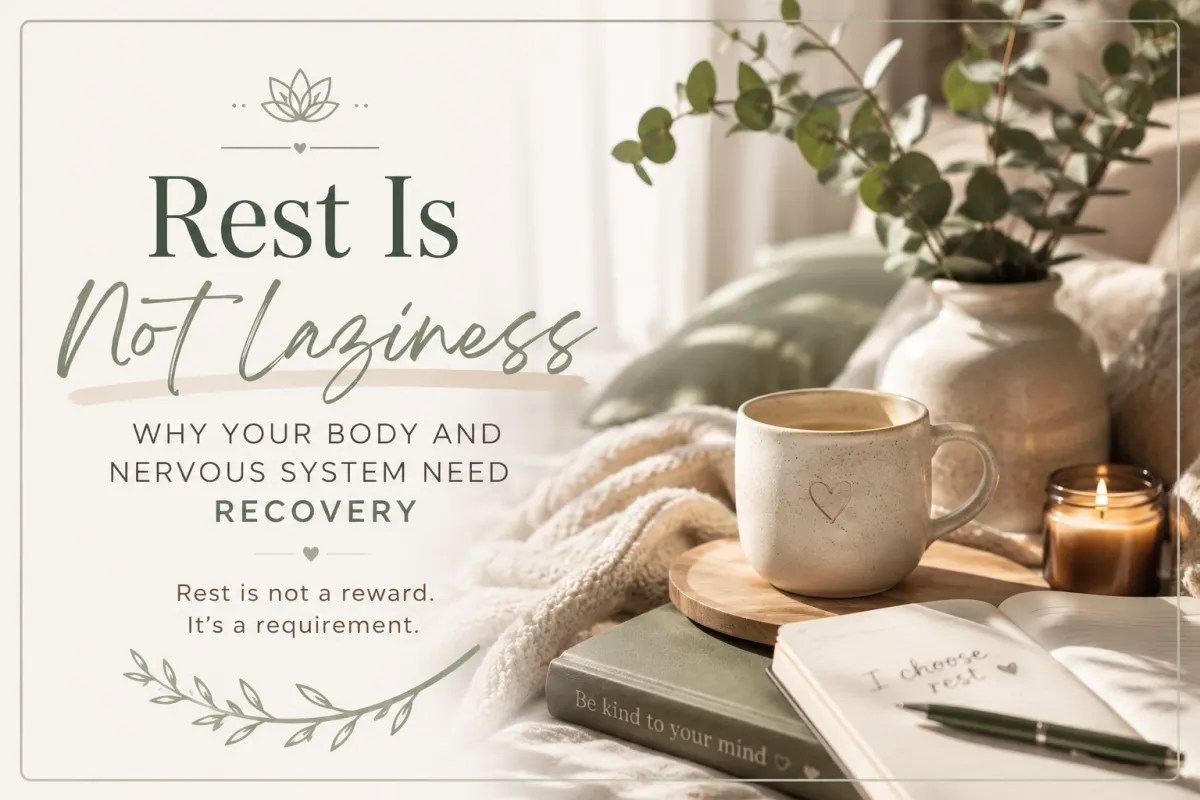
Rest Is Not Laziness: Why Your Body Needs Recovery
Somewhere along the way, many of us learned that resting meant we were falling behind.
That slowing down was “lazy.”
That taking a nap was wasting time.
That pushing through exhaustion was something to be proud of.
So we keep going.
Even when our bodies ache.
Even when our minds feel foggy.
Even when our nervous systems are quietly begging us to stop.
For people living with burnout, chronic stress, chronic illness, sensory overwhelm, or emotional exhaustion, this pressure can become especially damaging. Rest stops feeling nurturing and starts feeling uncomfortable. Guilty, even.
But the truth is this:
Rest is not laziness.
Rest is recovery.
Rest is regulation.
Rest is part of being human.
And your body was never designed to function in survival mode forever.
This article was inspired by the reminder that taking a full day of rest is not indulgent or selfish, it is necessary for your wellbeing.
Why So Many People Feel Guilty About Rest
We live in a culture that often celebrates exhaustion.
Busy schedules are treated like badges of honour. Productivity is mistaken for worthiness. Many people feel pressure to constantly “do more,” even when their bodies are already overwhelmed.
For those with chronic illness or nervous system dysregulation, this can create an exhausting cycle:
push through
crash
recover slightly
push through again
Over time, your body begins to lose trust that it will ever truly get a chance to recover.
That is why intentional rest matters so deeply.
Not just sleep.
Not just collapsing at the end of the day.
But genuine, nourishing restoration.
Your Nervous System Needs More Than Sleep
Many exhausted people are technically sleeping…
yet still waking up drained.
Why?
Because exhaustion is not always just physical.
There are many different forms of depletion:
emotional exhaustion
mental overload
sensory fatigue
social burnout
creative depletion
The nervous system needs recovery in multiple ways.
Sometimes what you actually need is:
silence
emotional space
reduced stimulation
solitude
softness
safety
stillness
Your body cannot heal while it constantly feels under pressure.
Rest Actually Improves Productivity
One of the biggest myths about rest is that it makes you “less productive.”
In reality, the opposite is often true.
Rest helps your brain recover from stress and mental overload, allowing you to return with greater clarity, focus, and creativity.
When we ignore rest for too long, we often experience:
brain fog
irritability
forgetfulness
emotional sensitivity
fatigue crashes
reduced concentration
decision fatigue
The nervous system simply becomes overloaded.
Rest is not the opposite of productivity.
Rest is what allows sustainable productivity to exist in the first place.
Chronic Stress Lives in the Body
When stress becomes constant, the body begins to adapt to survival mode.
You may notice:
tight shoulders
jaw tension
headaches
digestive issues
shallow breathing
poor sleep
increased inflammation
emotional overwhelm
Over time, chronic stress can contribute to more serious physical and emotional health concerns.
This is why rest should never be treated as a reward you earn only after burnout.
Rest is preventative care.
Gentle Ways to Begin Resting Again
If rest feels unfamiliar, uncomfortable, or guilt-inducing, start small.
Your nervous system may need time to relearn safety in stillness.
Some gentle starting points:
sit quietly for five minutes
step outside for fresh air
listen to calming music
take a micro rest break during the day
journal your thoughts
cuddle a pet
stretch gently
disconnect from screens for an hour
take a slow bath or shower
allow yourself to do absolutely nothing for a little while
Even small pauses can help regulate an overwhelmed nervous system.
Signs Your Body May Be Asking for Rest
Sometimes the body whispers before it starts shouting.
You may need more rest if you notice:
feeling emotionally reactive
struggling to focus
constant fatigue
needing more recovery time
feeling numb or disconnected
irritability over small things
trouble sleeping despite exhaustion
feeling overwhelmed by noise or people
frequent headaches or tension
loss of motivation or joy
These are not personal failures.
They are signals.
A Different Way to Think About Rest
What if rest was not something you had to earn?
What if rest was simply part of caring for yourself?
Not laziness.
Not weakness.
Not falling behind.
Just human.
Your body is not a machine.
Your nervous system is not designed for endless output.
And healing rarely happens while constantly rushing.
Sometimes the most productive thing you can do is pause long enough to recover.
Gentle Reflection
Take a quiet moment and ask yourself:
What kind of rest have I been denying myself lately?
Physical rest?
Emotional rest?
Mental rest?
Sensory rest?
Your answer may reveal more than your exhaustion ever could.
Gentle Call to Action
If your body has been asking for rest, softness, or space to breathe, you do not have to navigate it alone.
Explore our gentle wellness resources, nervous system support tools, guided practices, and restorative self-care collections created for burnout, overwhelm, and chronic exhaustion.
Explore the Spoonie Self-Care Library
Gentle Reads for You
Supportive Disclaimer: Phoenix Vitality content is designed for gentle wellbeing support and is not intended to replace medical advice or professional healthcare support.